How To · technique
How to Thicken Pasta Sauce Without Flour
Simple ways to thicken pasta sauce without flour using reduction, cheese, pasta water and other practical kitchen methods.
A pasta sauce that looks too thin usually does not need flour. In many cases the best fix is simply to remove excess water, emulsify the sauce properly or add an ingredient that naturally gives the sauce more body.
The right method depends on the sauce.
Quick answer
For most pasta sauces, try these in order:
- Simmer the sauce uncovered for a few more minutes.
- Toss the pasta directly in the sauce.
- Add pasta water only in small amounts if the sauce needs emulsifying.
- Add finely grated parmesan when it suits the recipe.
- For vegetable or bean sauces, blend part of the sauce.
Do not add several thickening ingredients at once. Fix the consistency gradually.
Method 1: Reduce the sauce
Reduction is usually the cleanest solution.
Simmer the sauce uncovered over low to medium-low heat so excess water can evaporate. Stir regularly.
Tomato sauces often benefit from this method because extra cooking also concentrates the flavor.
Cream sauces need gentler heat. Avoid a hard boil, which can make dairy sauces separate.
Method 2: Finish the pasta in the sauce
Sometimes the sauce is not truly too thin—it simply has not had a chance to coat the pasta.
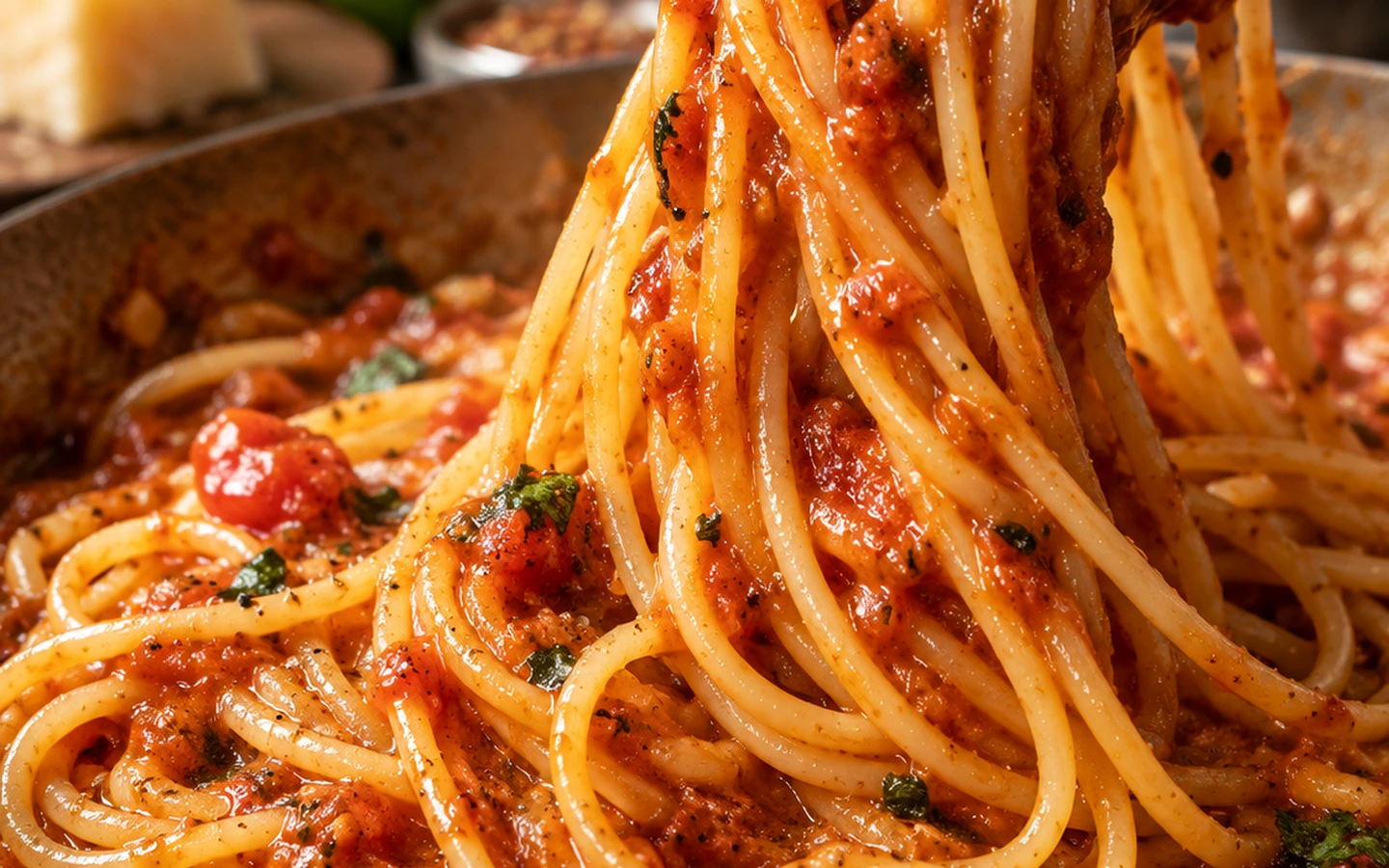
Transfer the al dente pasta into the pan and toss it with the sauce for a minute or two.
The pasta brings surface starch into the sauce and absorbs a small amount of liquid.
Method 3: Use parmesan
Finely grated parmesan can add body to creamy, garlic, butter and some tomato sauces.
Lower the heat before adding the cheese, then stir it in gradually.
Do not add a large amount simply to thicken a sauce. The cheese should still make sense for the recipe.
Method 4: Blend part of the sauce
This works particularly well with sauces containing:
- cooked vegetables
- white beans
- pumpkin
- tomatoes
- onions
Blend a small portion, then stir it back into the remaining sauce.
You get a thicker texture without adding flour or starch powder.
Method 5: Add a puree that fits the recipe
A small amount of pumpkin puree, blended beans, cooked cauliflower, broccoli or zucchini can give a sauce more body.
This works best when the ingredient already fits the flavor of the dish.
What about pasta water?
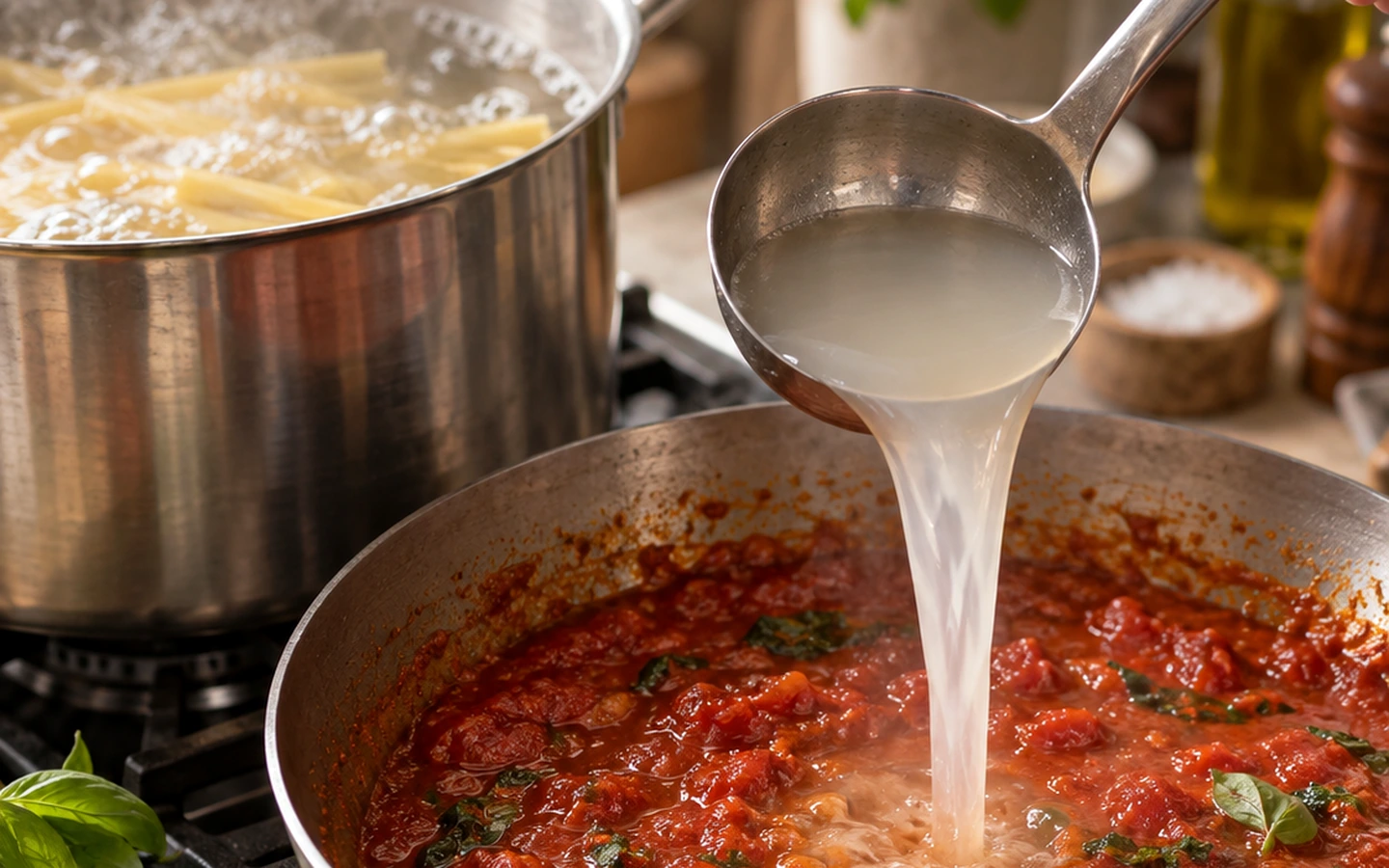
Pasta water is useful for emulsifying and adjusting a sauce, but it is not a universal thickener.
If the sauce is already watery, pouring in a large amount of pasta water can make the problem worse.
Use it in small quantities while tossing, especially in butter, cheese and oil-based sauces.
How to thicken tomato pasta sauce
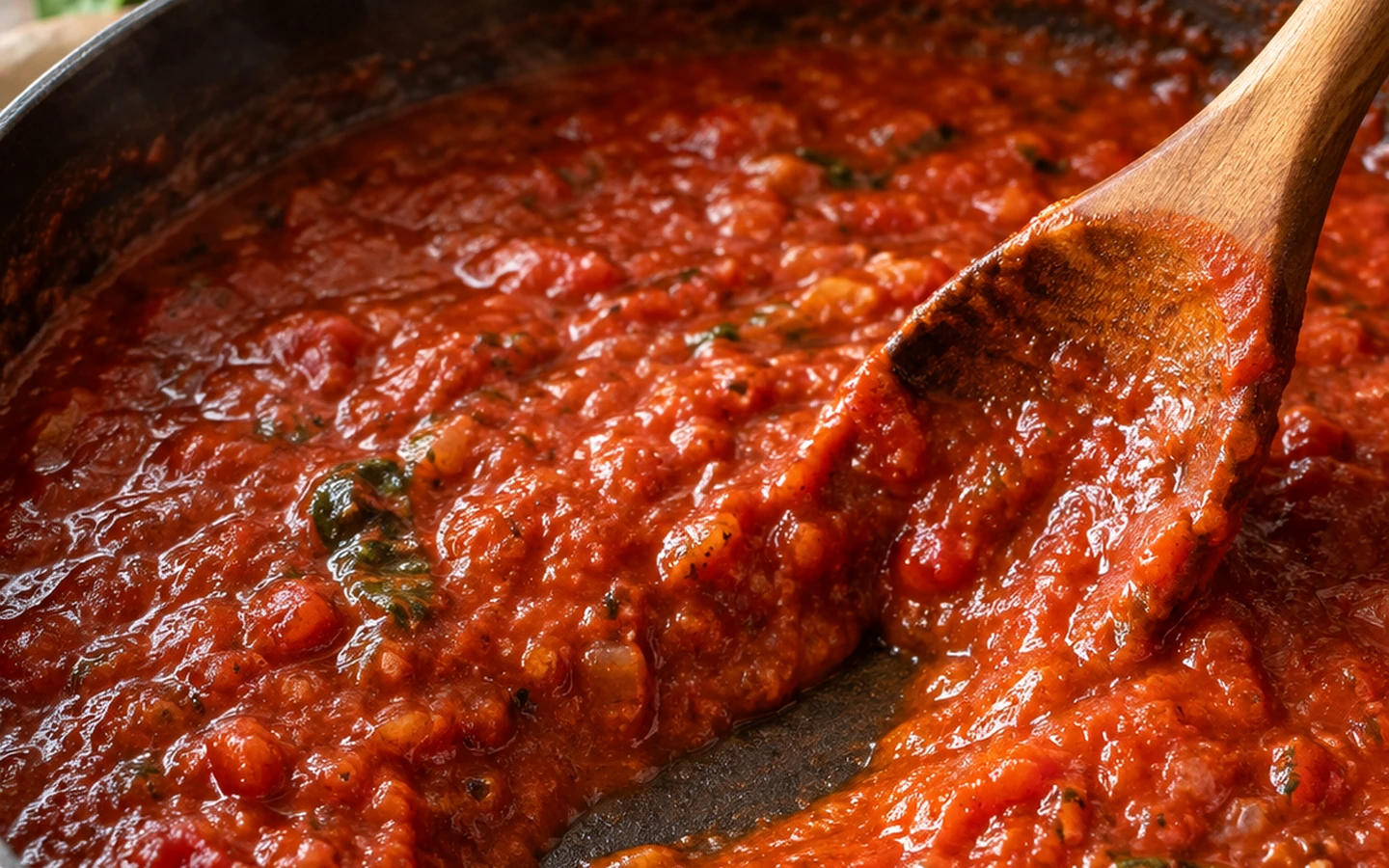
For tomato sauce, reduction should usually be your first move.
Simmer it uncovered until it coats the back of a spoon more easily. You can also blend a portion if the sauce contains chunks of tomato or vegetables.
Avoid adding cream, cheese or puree unless they fit the recipe you actually want to make.
How to thicken creamy pasta sauce
For a creamy sauce:
- simmer gently
- keep the heat moderate
- add parmesan gradually if appropriate
- toss with the pasta
- allow the sauce to rest for a minute before deciding it is too thin
Cream sauces often continue to thicken slightly as they cool.
Common mistakes
Turning the heat too high
Fast boiling may scorch or split a dairy sauce.
Adding several thickeners
Butter, cheese, cream and puree can quickly turn a light sauce into something heavy.
Forgetting that pasta absorbs sauce
The final texture can change after the pasta has been tossed in.
Making the sauce too thick before serving
A sauce should be slightly looser in the pan than you expect because pasta continues to absorb moisture.
If you make it too thick
Add a small splash of reserved pasta water, milk, cream or another suitable liquid and toss again.
Add liquid gradually so you do not overshoot in the opposite direction.
Related guides
Read How to Use Pasta Water in Sauce for better control of sauce consistency, and How to Keep Parmesan Sauce From Turning Grainy if cheese sauces are giving you trouble.