How To · technique
How to Use Pasta Water in Sauce
Learn when to add pasta water, how much to use and why its starch helps pasta sauce coat noodles more evenly.
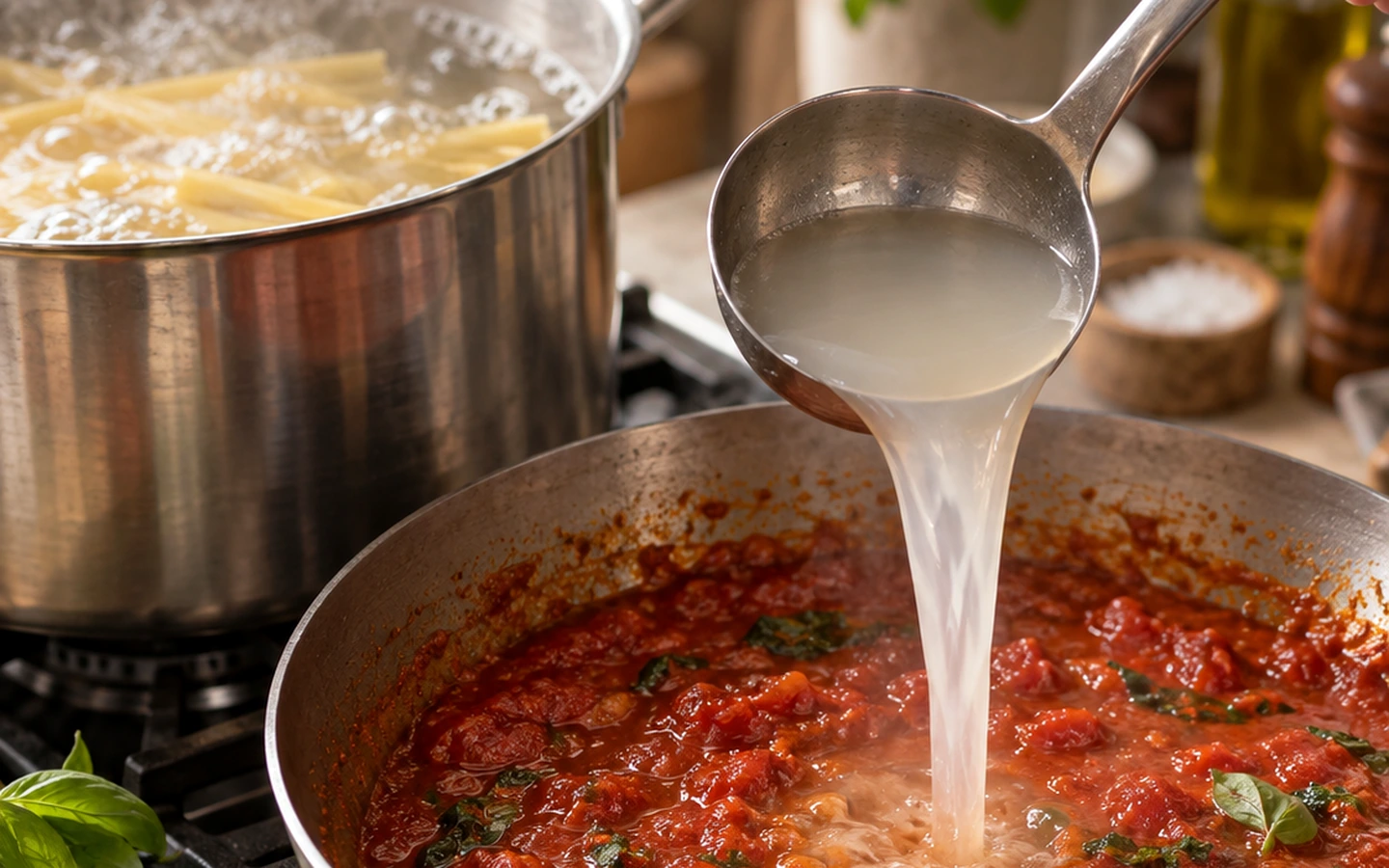
Pasta water is one of the simplest tools for making a sauce feel more finished. Used correctly, it can loosen a sauce, help fat and water combine, and make the sauce cling to the pasta instead of collecting at the bottom of the bowl.
The important part is how you use it. Pasta water is not a magic thickener, and adding too much can make a sauce watery or salty.
Quick answer
Before draining your pasta, save about 1 cup of the cooking water. Add it to the sauce a small splash at a time while tossing the pasta over low heat. Stop when the sauce looks glossy and coats the noodles evenly.
You will often use much less than the full cup.
Why pasta water helps sauce
As pasta cooks, some starch moves from the pasta into the water. That slightly starchy liquid can help water and fat stay mixed while you toss the pasta with ingredients such as butter, olive oil, cheese or cream.
It also gives you a controlled way to loosen a sauce without immediately reaching for more cream, oil or stock.
When should you save pasta water?
Save it before you drain the pasta.
A heatproof measuring cup is useful. Scoop out around 1 cup, then drain normally.
Even if the recipe only needs a few tablespoons, having extra gives you room to adjust the consistency.
How much pasta water should you add?
Start small.
For four servings of pasta, try adding 2 tablespoons at a time while tossing. Watch the texture before adding more.
Different sauces need different amounts:
- A garlic-butter sauce may need several small splashes to become glossy.
- A thick cream sauce may only need enough to loosen it.
- A tomato sauce may need little or none if it is already the right consistency.
The sauce should coat the pasta—not turn soupy.
The best time to add it
For many sauces, the best moment is after the pasta has been transferred into the sauce.
- Cook the pasta until just al dente.
- Reserve pasta water.
- Move the pasta into the sauce.
- Add a small splash of pasta water.
- Toss over low heat.
- Repeat only if the sauce still looks too tight or dry.
This finishing step helps the pasta and sauce become one dish rather than two separate components.
Pasta water with butter and cheese sauces
Pasta water is particularly useful in sauces built from butter, oil and cheese.
For example, in our 10-Minute Garlic Butter Pasta Sauce, the water helps the melted butter and parmesan spread over the noodles more evenly.
The key is to add cheese over low heat or off the heat, then toss vigorously with small amounts of pasta water.
Pasta water with creamy sauces
Cream sauces can become too thick as they sit.
A splash of reserved water can loosen the sauce without making it much heavier. Add it gradually so you keep the creamy texture.
Can pasta water make sauce too salty?
Yes.
If your cooking water is very salty, every splash also adds more salt to the finished dish. Taste the sauce before adding extra salt, parmesan, stock or other salty ingredients.
Common mistakes
Adding too much at once
It is much easier to add more water than to remove it. Start with a spoonful or small splash.
Using pasta water as a substitute for proper reduction
If a tomato sauce is watery because it has not cooked long enough, simmering it may be the better fix.
Rinsing the pasta
For most hot pasta dishes, rinsing removes surface starch that can help sauce cling.
Letting the pasta and sauce sit separately
Whenever possible, finish the pasta in the sauce for the final minute or two.
What should the final sauce look like?
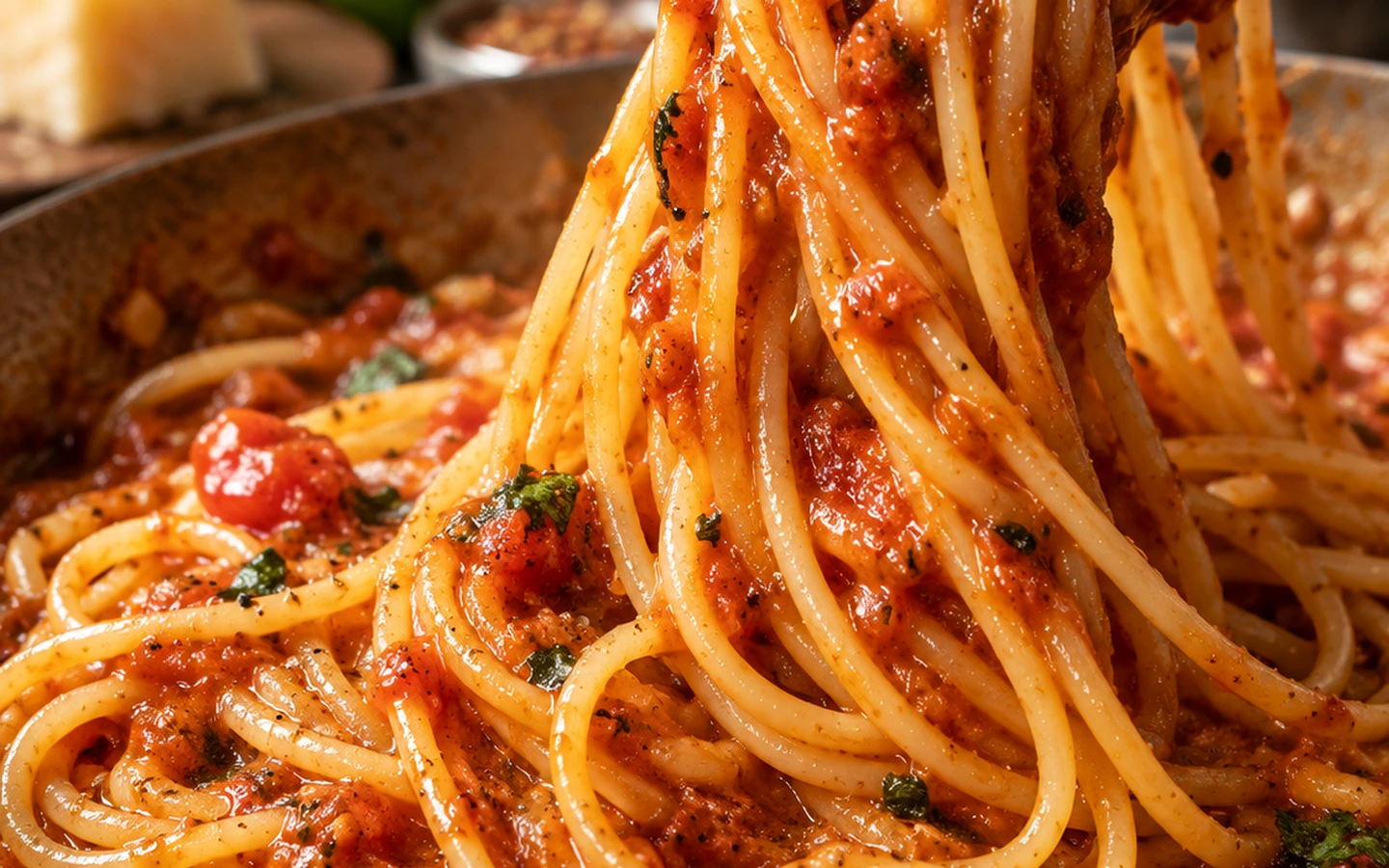
The finished sauce should look glossy and coat the pasta lightly and evenly.
When you lift a forkful of pasta, the sauce should come with it instead of leaving a puddle behind.
Related guides
If your sauce still feels too thin, see How to Thicken Pasta Sauce Without Flour. If it slides off the noodles, read How to Make Pasta Sauce Stick to Pasta.